Showing posts with label reshmi. Show all posts

Tuesday, 7 April 2015

Pressure Vessel Review and Safety

Pressure vessel create an oversized and relevant danger to those who operate around them. They will seriously injure and kill. For this reason risk should be minimized once addressing or in operation pressure systems.

It is the jure the employer's responsibility to supply a secure operational setting, although everybody from the designer to the installer, to the user and the owner have duties to perform to stay the pressure vessel safe.

Pressure vessels square measure typically safe, it's only a poor approach or lax angle is taken that issues tend to arise. The most cases of incidents square measure as follows;
  • Poor style or instrumentation
  • Poor maintenance
  • Unsafe operating practices
  • Operator error
  • Poor training or supervision
  • Inadequate repairs

The common thread all told these cases, is human error. With the right systems in situ the chance may be reduced dramatically, and accidents prevented.

Some of the most ways that to scale back risk square measure printed. A number of these include;
Providing safe and applicable instrumentation
  • Being alert to the operational conditions 
  • Fitting applicable protective devices and making sure they work properly
  • Carrying out applicable maintenance
  • Making bound all staff units trained to associate degree honest acceptable commonplace 
  • Having instrumentation involved examining oftentimes
  • Using safe operating practices and procedures

Non-destructive testing or NDT will effectively fulfill a number of these needs (suitable maintenance and examining equipment), that is why it's wide want to monitor the condition of pressure vessels across the Australia.


Non-destructive testing, additionally referred to as NDT uses a range of techniques to check instrumentation while not degrading it in any manner, or having to chop or break it apart, like for research laboratory testing. It utilizes the principles like radiography, magnetism, eddy currents and acoustics to collect data in a very non-invasive manner.


LFET or Low Frequency Electromagnetic Testing may be wanting to examine the wall plates, whereas eddy current technique may be used for welds. Different techniques typically used square measure unreal penetrant, magnetic particle and inaudible‚ counting on the necessities of the review, likewise because the ability of the corporate performing arts the review.


Through regular testing, the condition of pressure vessels may be monitored, and issues may be prevented before they occur. The value of the review has been often negligible in discernment, compared to prices incurred when a significant failure has occurred.

Thursday, 2 April 2015

Why to Use Ultrasonic Cleaning Systems?

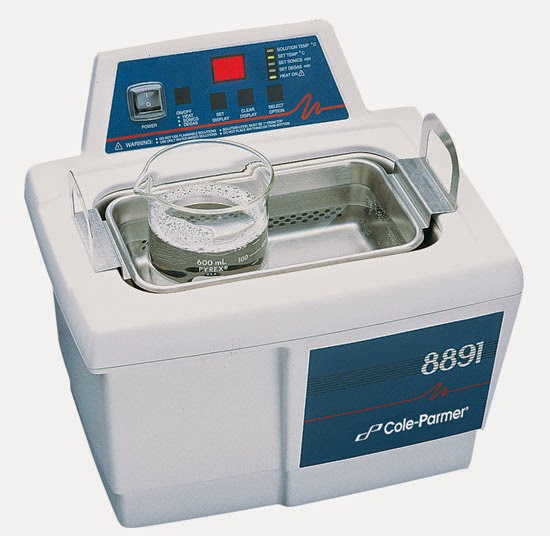
If you are involved in engineering or industrial sectors, you must be familiar with the difficulties spotted in the process of cleaning mechanical or other delicate parts. Because of huge risk involved in cleaning industrial and delicate products, the technicians apply very high-precision technique also known as ultrasonic cleaning technology. The technology is widely held for great exactness and it guarantees for complete safety and immunity in against of any kinds of potential damages. Ultrasonic cleaning technology works on micro technology triggered by ultraviolet and ultrasonic rays. The extent of its application varies from tough industrial products to highly delicate products like jewelries and medical instruments. These days, the technology is being applied hugely because of several benefits.

http://www.heatecholdings.com/

Ultrasonic cleaning machines are made of two key gears such as ultrasonic generator and transducer. These two apparatuses in an ultrasonic cleaning machine play very vital role in the entire process. Apart from these two, there are other subsidiary components such as dryer, tray, container and power regulator. These all mechanisms work collectively to give very precise output in a small time frame. Transducers are exclusively responsible to create a predetermined frequency ranging from 20 KHz to 250 KHz and more. It comes in various shape and sizes and can be fixed with the machine anyway.
Why ultrasonic cleaning machines are selected for cleaning works?
There are some very prominent causes, apart from technical benefits, behind selecting ultrasonic cleaning machines for cleaning or disinfecting various tools and instruments. First of all, the machine does not let the technicians apply much of chemicals in the cleaning process, as the machine itself makes it more effective with the help of clean water and a certain extent of ultra sound waves. The machine creates small bubbles in water and make them hit on the dirt surface of the instrument. Secondly, the machine is also being preferred because its prompt services. It cleans the products very shortly and does not harm them at all. Energy-efficiency is its third most attractive aspect which exclusively makes the people save on energy and cost as well.
http://www.heatecholdings.com/

With the mounting popularity of ultrasonic cleaning machines among the people, it is now accessible in the market with the help of immense information available in the web world. You can visit the internet and fetch require information of a particular service provider. There is a huge possibility of having inexpensive service because of several service providers.

Engine Oil Coolers

All engines require a cooling system which is provided by the radiator system containing water. However, high-performance autos used in competitive motor sports, or vehicles whose engines have to work hard to carry large weights or two other vehicles have benefited from the installation of separate engine oil cooler. In order to remove one third of the heat generated by the engine, the integration of reliable and efficient engine oil coolers is becoming more common in all types of motor vehicles.

http://www.heatecholdings.com/


Generally, a car's engine has two cooling systems which can be found on the top of the engine and its surrounding area. Ideally, the operating range of engine oil must be kept within 180 to 200 Fahrenheit. It is important that the oil maintain this temperature range to ensure that it will perform its intended functions correctly.

As the modern auto engines in newly manufactured cars tend to be smaller and faster running than previous designs, they produce more heat. Because of this the maintenance of oil temperatures within acceptable levels is critical. Smaller engines also have reduced oil capacity. This means that there is extra stress put on all the engine components and the motor oil is even more important in ensuring the smooth running of every part.

How Oil Coolers Work

Oil coolers come with two basic designs -- the tube-and-fin style coolers and the stacked plate coolers. With tube-and-fin style coolers, heat produced by the engine is extracted through the tubes and carried to the fins, where it will be sopped up with the air flowing from the cooler. Different types of tubes are used by varying cooler manufacturers. Some make use of swizzle stick like agitators which are embedded inside the tubes in order to preclude oil sludge build-up. However, the result from this can be quite random and often results in minimal improvement to the cooler's overall efficiency.

http://www.heatecholdings.com/


The stacked plate coolers, on the other hand, disperse heat by allowing the oil to flow into multiple passages inside the stacked plates. Stacked style coolers are designed to cool the oil by air flow passing over the multiple plates, however the elements are stacked so close together that it inhibits air flow in the cooler, and they are not as efficient as they should be. The stacked plate oil cooler design is not applicable for automobiles that are subjected to stressful environments like those competing in auto racing.

Efficient Oil Coolers

In particular, the Perma-Cool engine cooler with its patented "Turbulator" is gaining reputation as being more efficient than both the tube and fin or stacked style coolers. It offers numerous benefits and available in varying cooling kits.

The advantages that you'll enjoy with this kind of engine cooler include the following:

  • Maximum cooling efficiency without compromising oil flow
  • Reduction of oil temperature to acceptable levels
  • Significant heat subjugation on the engine and radiator
  • Improved capacity of oil system
  • Hopefully, this information will help you gain enough knowledge about the use and importance of engine oil coolers.

Applications of New Pressure Vessels

Gases or liquids need to be stored in closed containers under a certain pressure. It is done to transform or maintain the state of the contents. There are many types of new pressure vessel that are available to meet these different requirements. The primary types are thin walled, thick walled, strong tanks, transportable containers, propane bottles and gas cylinders. The vessels contain liquid, vapor or gas at different stress levels. All the types of vessels are designed to suit varied material and pressure levels. 
http://www.heatecholdings.com/

The thin wall types of containers are more common in use. They further can be cylindrical vessels or spherical vessels. In application, it is imperative that stress in the wall is considered to be uniform. The use of the containers has changed along with the changing industrial conditions. Most common examples of containers include diving cylinders, nuclear reactor vessel, road vehicle air-brake reservoir, hydraulic reservoir and storage used pressure tanks for butane, ammonia, propane and chlorine gases and liquids. All these vessels are manufactured under strict industrial norms and specifications. Even a slight defect can be an invitation to disasters. Only hiring the containers from the right companies can give desired results.
Cylindrical design is the most common with end caps called heads. The design of a container is very important to get a successful result. The more complicated the shapes, the tougher it is to analyze a safe operation. The new pressure tanks undergo strenuous tests to meet manufacturing standards. Most of these are made of steel as it is a corrosion resistant material. It is built under special prescribed precautions. 

http://www.heatecholdings.com/

Some of the new pressure vessels are made of composite materials. These composite materials include filament wound composite using carbon fiber held in place with a polymer. It is much difficult to manufacture with these materials due to the high tensile strength of carbon fiber. The containers are further lined with resources like metals, ceramics, or polymers to avoid leaking and protect the structure of the vessel from the contained medium. This liner may also carry an important portion of the pressure load.
Thick walled vessels are 10 percent thicker and are subject to damage as a result of high temperatures, mechanical loading and corrosive environment. Working in high temperatures in power stations, chemical and petro chemical industries may result in thermal fatigue, creep-fatigue and other processes leading to degradation. This is the case only subject to internal and external stress and strain exist in thick walled new pressure vessels. They have very high tensile strength. This means that thick walled vessels can hold up maximum stress.
New pressure vessels are also commonly used as transportable containers. These are mainly made of steel. It is designed to perform the tasks of air storage and partial separation of moisture. The final products are checked thoroughly to pass the set quality control standards. Even slight damages in the vessels can cause major damage to life and property. It is the comprehensive design, installation, operation and maintenance of a container that facilitates its usage.